
A Prior Art Search is No Longer a “Prior Art Search”
Why Context is Everything in Patent Practice
Author: Maria Denk
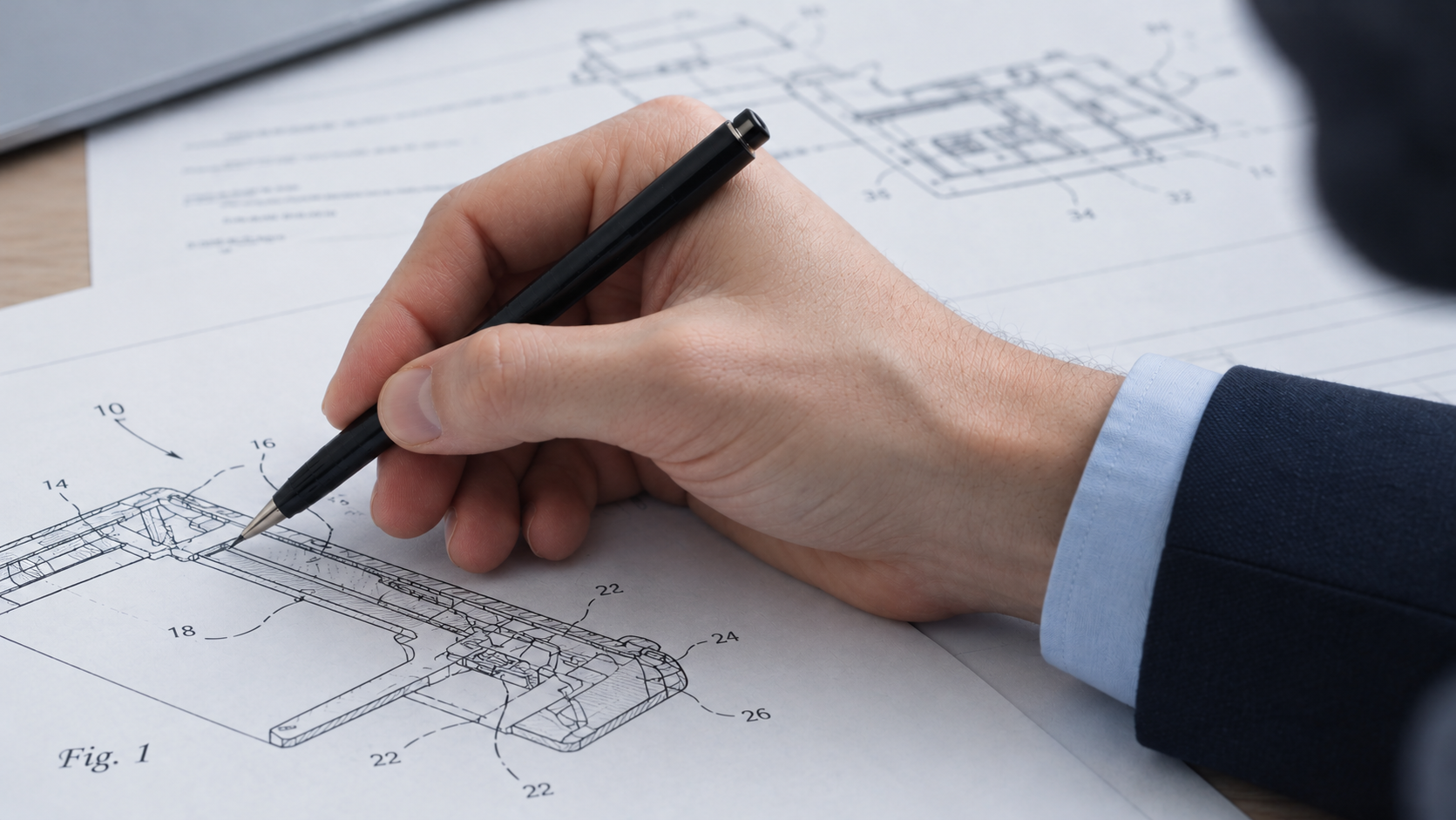
“I don't actually need to do a prior art search.”
Is something that we still hear from patent practitioners in 2026. With the limited tools of the past this is somewhat understandable; however, with the modern tools that are available, this thinking is shortsighted and frankly, obsolete.
Prior art searching was historically a one-and-done checklist item in the patent preparation process — sometimes optional, often outsourced. When search systems ran on boolean logic, the work was time-consuming (that is, expensive) and the ROI questionable. For practitioners working with tighter budgets or strong confidence in the subject matter, skipping it entirely was a common and a justifiable call. Others took a middle path: a quick keyword search on a free tool, enough to feel covered without the overhead of a formal engagement.
The introduction of AI-powered search tools now enables practitioners to conduct searches themselves in a fraction of the time it would have taken them with historic methods. For those who outsourced, the turnaround time was often up to 2 weeks. And for those who did a manual search, this could easily take several hours of work to get to a high-confidence answer.
Now despite the advances that AI unlocks, some practitioners are still drawing a limited conclusion. They see these advances and still land in the same place: there's no point doing a search if the client won't pay for it, or if they're confident enough in the invention. The tools have improved, but the mindset is stagnant. Glaringly missing from this calculus is what AI unlocks:
A prior art search is no longer “just” a prior art search.
The traditional framing for prior art search was as a simple go/no-go clearance check, or as a tool to suggest a narrower claim scope to avoid preventable surprises in the first office action. That limited way of thinking about prior art is itself now "prior art."
Within each relevant document that surfaces lies context that goes well beyond answering the question "is this patentable?" — the vocabulary used in the field, how similar inventions have been claimed, where the technical framing comes from, and what the landscape around the invention looks like. That context can direct not just claim drafting, but the specification, background, and even the figures of an application.
That context matters at every stage downstream: application drafting, claim scoping, claim charting, prosecution strategy, responding to office actions. And now, with AI tools automating some of these steps in the workflow, it matters in a new and more immediate way. These tools don't come pre-loaded with all the rich context the professional holds in their head— they work with what you, the attorney, gives them. This is the notorious garbage-in, garbage-out problem. Today's patent drafting tools are impressively good at the form of an application, they know exactly what a patent should look like. What many of them are missing is the landscape around the invention. Without that context, you're asking them to write in a vacuum, and the result is an application that reads beautifully and may protect very little. Claim scope should be driven by what already exists, and that knowledge has to come from somewhere. It comes from the search. Good context: the right references, the right technical framing, the relevant claim language from similar inventions — shapes a materially better draft.
It's the difference between a first pass that's 80% of the way there and three rounds of prompting that get you to the same place at significantly higher cost, in time and tool usage alike. The mental model of what a “prior art search” is dated. To be truly an AI-enabled law firm, lawyers have to think about it as context search. Where the goal is not just to uncover out what’s old, rather to build the information foundation that supports everything downstream, and what other AI tools depend on to be effective.
Quality matters tremendously here, and volume is not a proxy for it. Dumping a large set of loosely relevant results into an AI tool doesn't give it more to work with — it gives it more to get wrong.
AI systems are sensitive to noise in a way that human reviewers aren't. A marginally relevant reference actively pulls the model toward language and claim structures that don't serve your invention. A search that returns 200 loosely matched results may have saved time upfront, but it hasn't done you any favors. Hence the question worth asking is not how many references are being considered, but rather do these references represent a quality data set that accurately represents the closest prior art?
This distinction matters more with AI than it ever did with purely human workflows. An experienced practitioner carries years of implicit domain knowledge — they intuitively discount a tangential reference, recognizing when claim language doesn't translate across subfields. An experienced patent professional will apply judgment that never gets written down anywhere, nor can be taught in a textbook. That tacit knowledge acts as a filter.
AI tools don't have that filter baked in. They process what they're given, without the ability to sense when a reference is technically adjacent but conceptually irrelevant. What a skilled attorney would silently set aside, an AI system may treat as a signal. This is why the quality bar for inputs has actually gone up, as AI enters the workflow. A robust AI-based search tool is important for attorneys more than ever.
If the goal of search is context, what does a context-first workflow actually look like in practice? That’s where we’re headed next. In a future post, we'll walk through the process of what AI enabled patent drafting looks like, including context-gathering before you write a word, and what claim scoping looks like. The search step looks different when you understand what you're really building toward.
Book a demo and see Clerq in action.
Book a demo and see Clerq in action.