

Search
Search patents by what they mean.
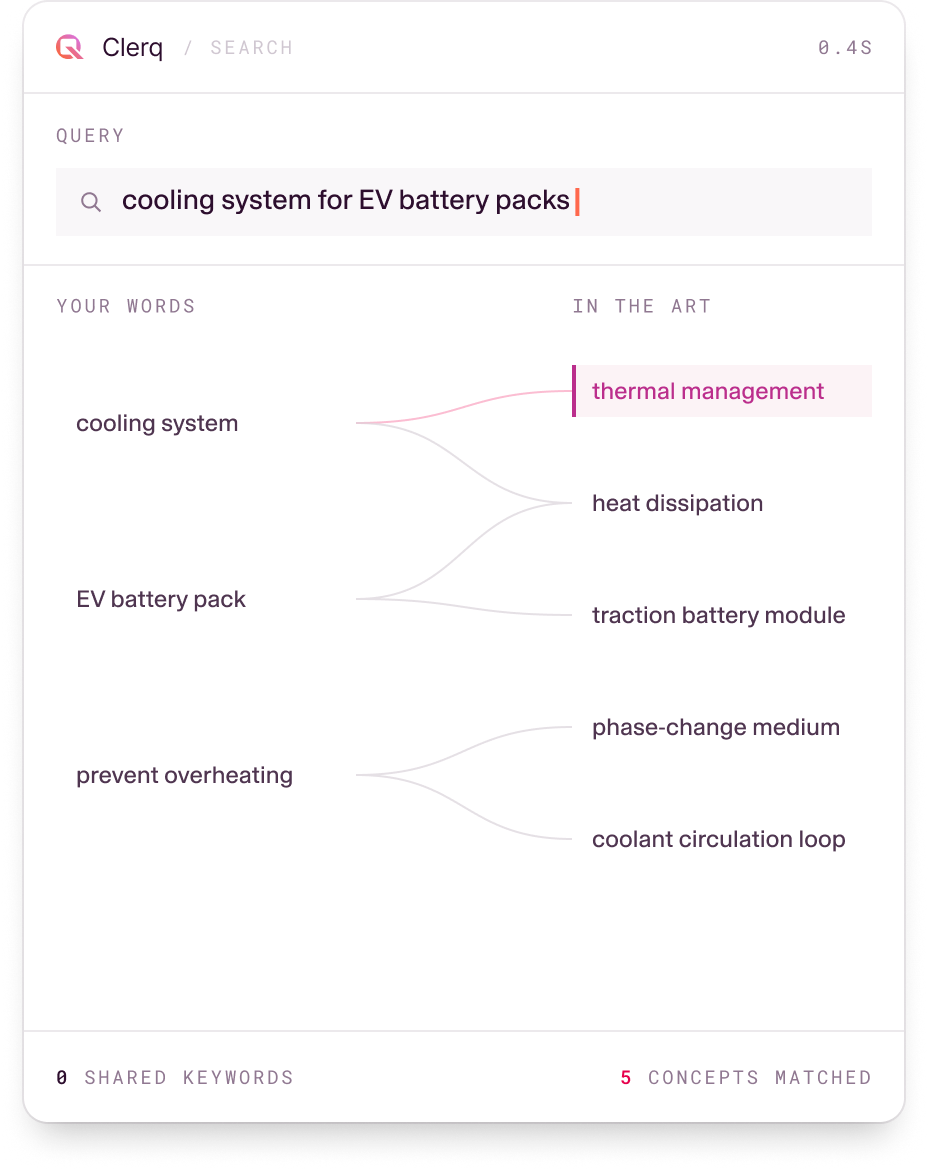
The search NLPatent built its reputation on — the engine that underpins Clerq’s agents, for the work you want your hands on. Some questions need a structured workflow. Some need you — semantic search under your direct control, with filters and boolean logic when you need to get specific.

.png)

















"With Clerq, there’s no delay. I can start looking at results immediately. I’ve brought it straight into innovation capture sessions, with the client watching, and found in minutes what a keyword search missed."
why clerq search
So much patent work starts with knowing the art surrounding an invention. Keyword search makes you guess at it, in a language built to obscure. Clerq searches by meaning instead — start from documents, a description, or a patent number, then refine, question, and analyze what comes back.

A search you can steer
Highlight passages you find relevant, and the system learns to follow your judgment.

Answers, not just results
Ask questions of any reference, or get a relevance analysis of how it reads on your query.

Nothing to hallucinate
Search retrieves existing documents from the corpus — every reference is real, with its text in front of you.
How it Works
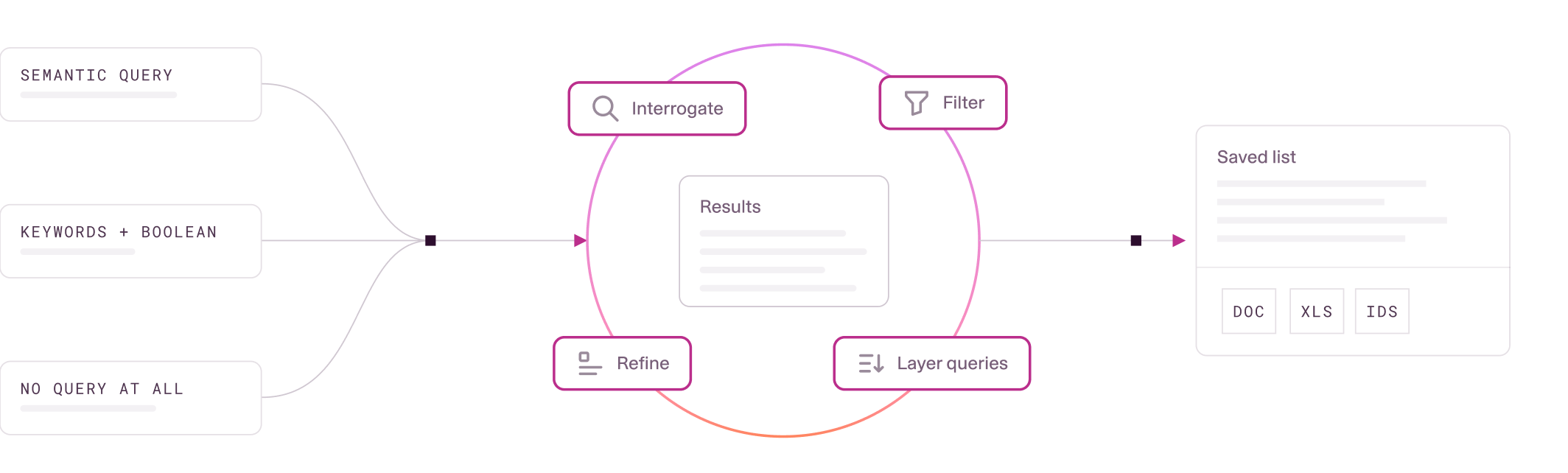
Flexible by design — nothing forces a fixed sequence on you. Three ways in, every move available, and the pieces below combine in whatever order the search requires.
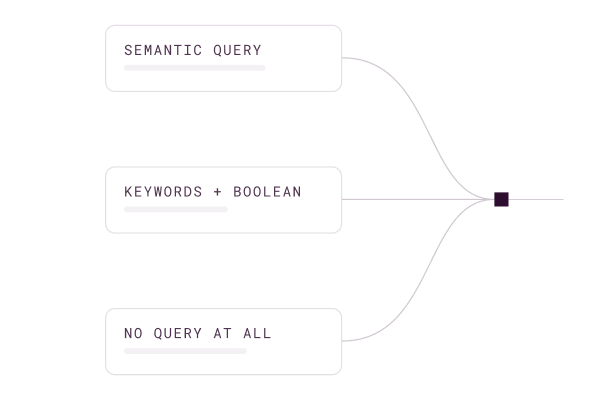

Skip the query
Three entry points, presented as equals — a semantic query, keywords and Boolean, or no query at all.
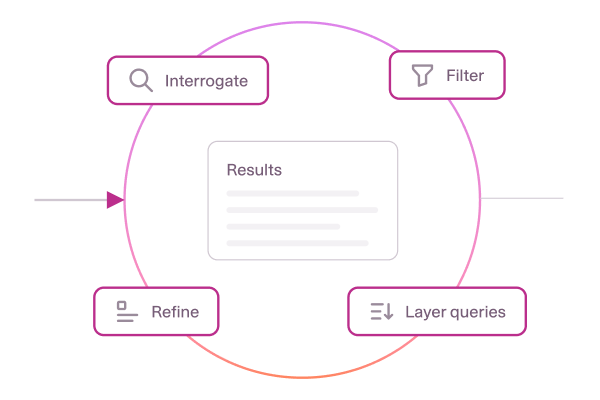

Work the results, in any order
Interrogate, filter, refine, layer. Four moves, available at any point, repeatable as many times as the search needs.
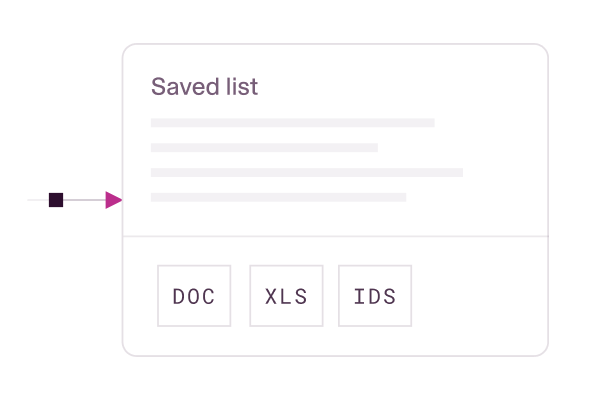

Leave with the list
The saved list builds itself as you work — export to Word, Excel, or straight into an IDS.
your move
Search, entirely on your terms
Each search task is unique, so Clerq doesn’t assume a route. The corpus is yours to explore from whatever angle the work needs.

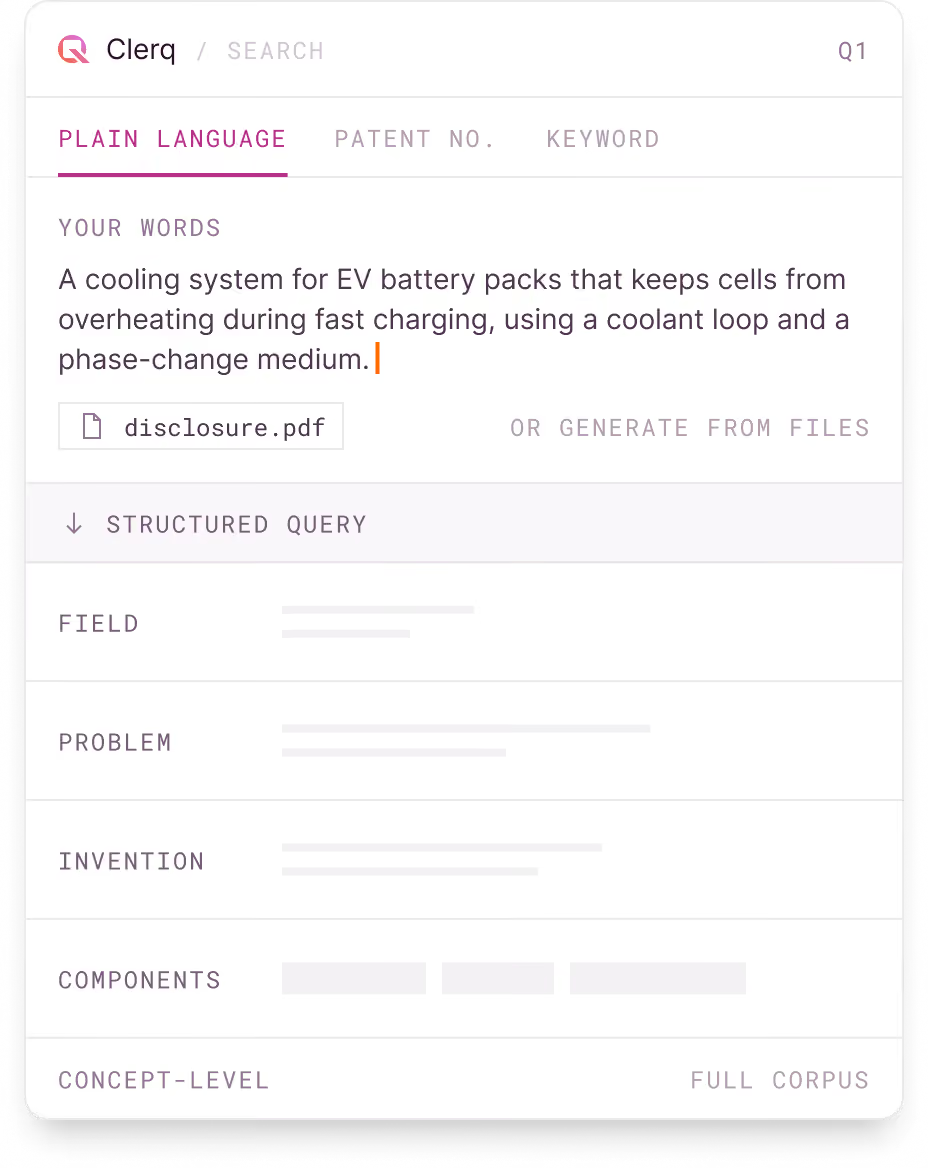
Start from what you have
Raw documents, a plain-language description, or a patent number
Need to get specific?
Rich filters and full boolean logic, for when distilation is essential
Skip the query entirely
Open the corpus, filter by anything from assignee to priority, and work from there

rank, refine, iterate
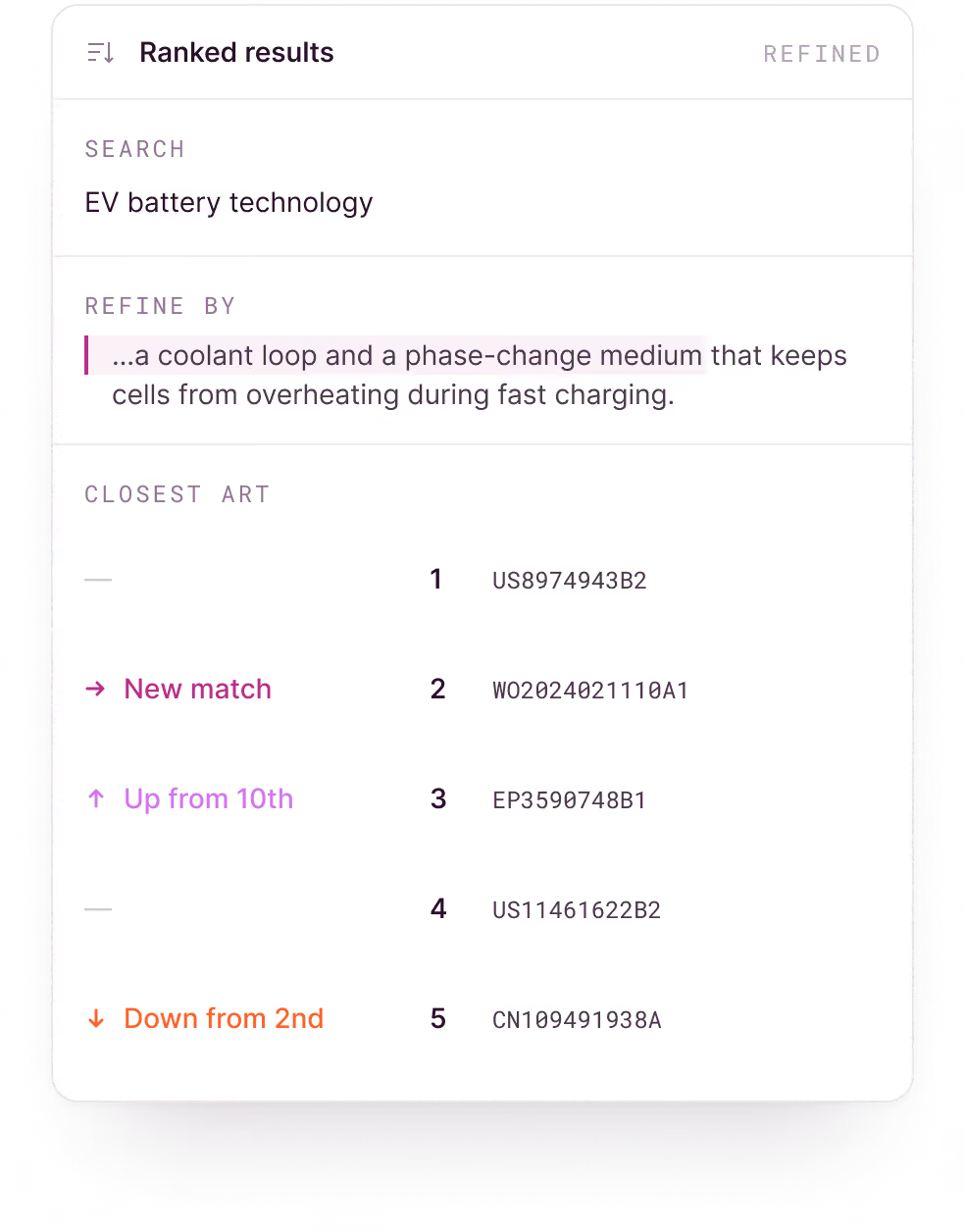
The closest art, ranked by relevance.
The model reads every document against your query and orders / reranks the list by conceptual closeness, with reasoning available for every rank.
Refine as you go
Emphasize key passages or save full results to nudge the search in any direction
Stack your queries
Build sets from different queries or filters, and see where they intersect
Filter or just highlight
Filter the results or highlight keywords to see where and how often they appear

Analyze
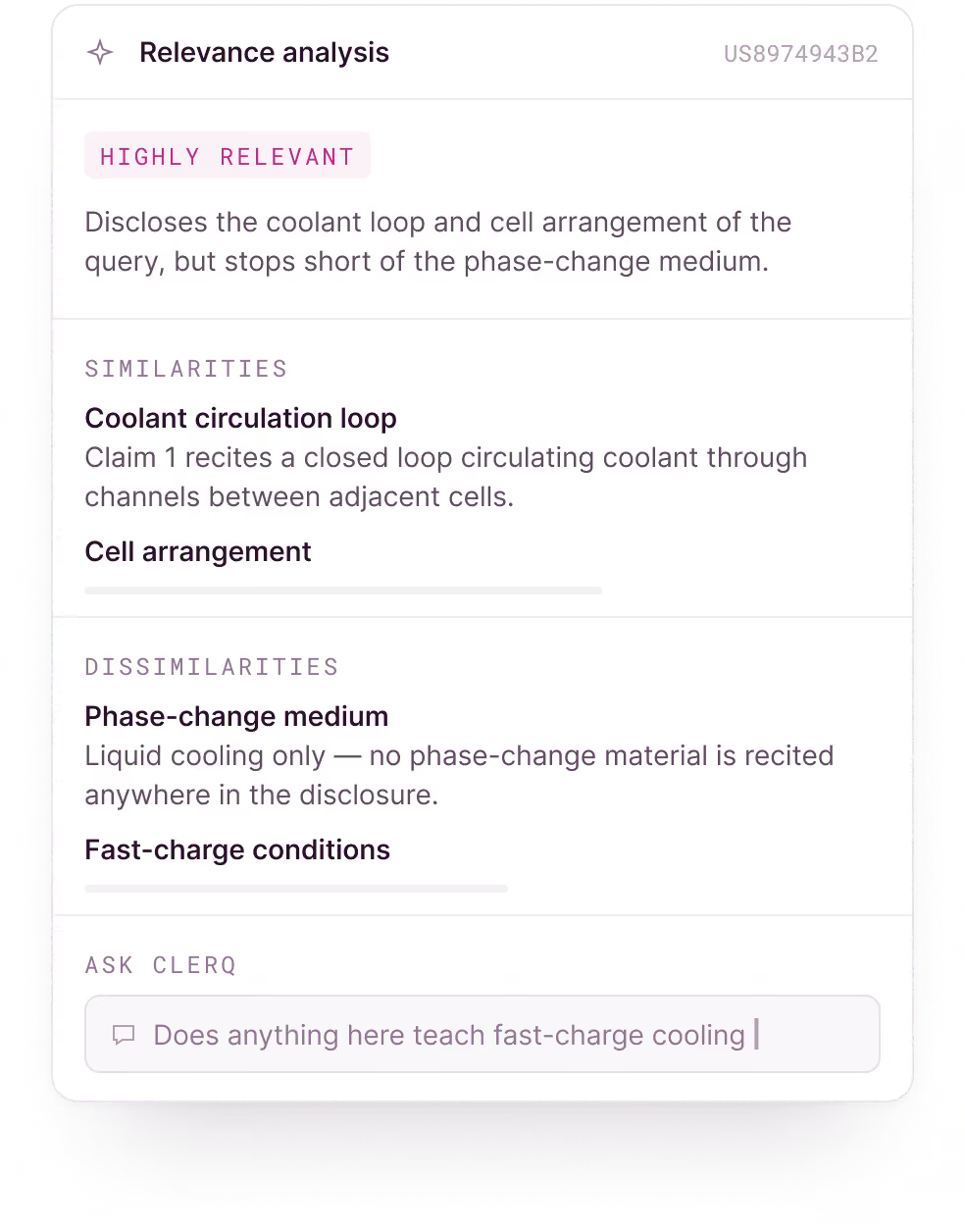
Rich analysis you can interrogate
Clerq works each feature on its own and in combination, then assembles the analysis — the point of novelty, the closest art, and the reasoning behind it. The depth of a human expert, at agent speed.
The first review, built in
Relevance Analysis — what each reference does and doesn’t disclose.
An expert at your fingertips
Ask Clerq — free-form questions to a single document or the whole result set.
Ready for handoff
Export to Word or Excel with the analysis attached, or straight into an IDS.
“Clerq has gone from helping me search to doing the work under my direction. What comes back minutes later reads like an expert did it.”
500M
Patent and non-patent literature documents from every major jurisdiction searched
5 Years
Building a model that understands patents the way you do — the foundation our agents stand on
2000+
Professionals at top law firms and innovative companies have made Clerq part of their practice
Ready for any job that touches prior art.
There’s no one-size-fits-all in patent work, and plenty of its tasks are research tasks in disguise — Clerq bends to all of them.
Patentability
Establish what’s new before drafting starts, with the art in front of you.

Invalidity
Start from a patent number and uncover the art the examiner never saw.

Prosecution
Read examiner-cited references closely, and pin down exactly where your claims differ.
Freedom-to-Operate
Clear the product before launch — search the in-force claims in its path.

Claim Scoping
See how far the art lets a claim reach before you draft it that wide.

Licensing
Find the patents your technology reads on, and the companies whose products might read on yours.

IP Due Diligence
Assess the strength of a portfolio while the deal is still moving.

Business Development
Search a prospect’s portfolio before the pitch, and walk in with something to say.

Book a demo and see Clerq in action.


Book a demo and see Clerq in action.